


I wound up reading 50 books about the American Revolution in seven months. Yes, I am insane.
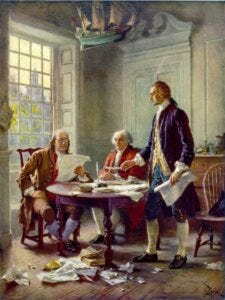
I’m a history geek. In November 2025, after viewing Ken Burns & Co.’s six-episode, 12-hour documentary, The American Revolution, I realized I didn’t know as much as I would like about the violent conflict and events that gave birth to the United States.
I decided to take the list of historians and writers interviewed in the documentary and find as many of their books as a I could at my local libraries. The intent was to use those books as a starting point for an autodidactic adventure to learn more about the birth, 250 years ago, of the now ailing nation known as the United States of America.

I did not limit myself to reading the works of people who appeared in the documentary. There was no real plan other than to learn more about The Glorious Cause, or more simply, The Cause, and discover more about the flaws in the nation’s founding that are now eating our democracy.
Starting out, my main consideration in choosing books was ”is it available to check out right now?” Some authors had more books available in audio, electronic and paper formats than others, and their books were available when I wanted to read them.
Historian Joseph Ellis wound up being an example of this. Ellis wrote eight of the 50 books on my reading list. Why? His books were available from the library when I wanted them. And after about the third book, I decided I really like his work.
Then, in military/political/marketing parlance, there was mission creep. There was a rabbit hole. I kind of chain-smoked books about the Revolutionary War for a few months. As soon as one was done, I used that one to light another.
I read a few works about the significant individual personalities, but I also read overviews of the entire conflict, and books that covered specific events and certain time periods.
Soon, I realized I’d read a bunch of books. But I didn’t want to count them. Yet. That would’ve spoiled the history nerd fun I was having.
Then this became some sort of crazy personal project. And no, I didn’t read 50 books, one for each state. At the beginning of June I realized that I had read 45 books with five more on the list. Fifty seemed like a good place to stop.

Some of the books on my reading list do not directly relate to what is now called the American revolution. This is on purpose. I sought context .
I sought out books about slavery and the slave trade as well as about North America’s indigenous peoples – books such as Native Nations, Black Elk Speaks, Tacky’s Revolt, American Inheritance and The Age of Wood, to gain sufficient additional background for a more comprehensive understanding of the birth of a nation.
The books not directly about the revolution informed the events and conditions leading to the formation of the United States and its political system.
I decided to read a few books about the events before and after the revolution as well as about things like wood and forests, which played a role in a world where war ships made of wooden planks, where powered by sails and wind that required masts made from tall, strong trees.
England had the most powerful navy in the word at the time. That navy’s ships were all made of wood. A lot of wood. It needed big trees for masts for its sail-powered fleet. A lot of big, straight trees for masts.
England had precious few straight, big trees for masts. America had plenty of trees, a seemingly uncountable number of trees, perfect for masts and deck planks. England desperately needed North America’s trees.
Some of what I learned from my reading many people already know. Other things I read clarified various facts and events. Others cleared up myths and misconceptions I had. As one would hope when trying to learn something, there were a great many facts and insights new to me.
Ten Things I Learned From 50 Books About The American Revolutionary War
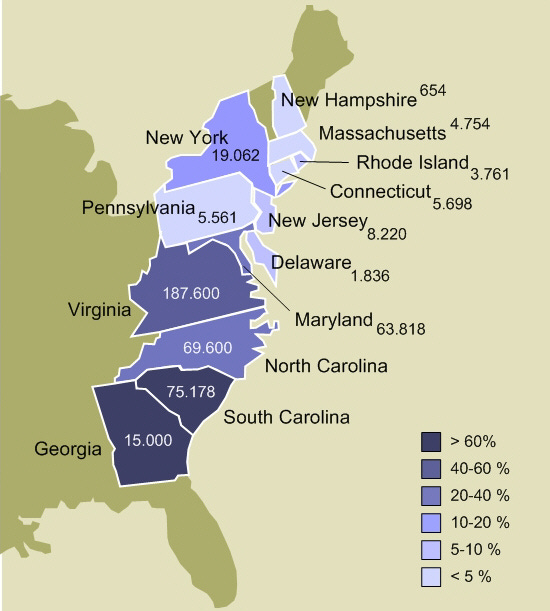
One and Two: There are two co-joined and consistent truths. Number one and two are the twin original sins of not abolishing slavery and the genocide of America’s indigenous peoples. These two factors are at the core social and political sicknesses that are now destroying the nation. These two are essentially inseparable as founding sins since it’s very difficult, if not impossible, to say which one was worse than the other.
Three: The third truism is the Founding Fathers (no women were directly involved in any of this) is that they did not want America to be a Christian nation. Separating church from state was foundational. Arguing that because the exact words “separation of church and state” aren’t in the constitution means the Founding Fathers didn’t want to keep religion out of government is a deeply dishonest red herring.
Four: The concept of giving women the vote was only thought about from the perspective of that would be a bad thing to do.
Five: It was called The Cause, not a revolution. Those loyal to The Crown were called “loyalists.” Those in favor of independence were “patriots” or “rebels.”
Six: A LOT of people were not on board with The Cause. Many residents of “the colonies” thought of themselves as English and wanted to remain so. Benjamin Franklin started out as very much a loyalist, for example. He lived in London for nearly 17 years as a representative of American colonies’ interests. Only though various humiliations and threats to his livelihood did he undergo a process to become a leading “patriot.”
Seven: Directly related to Five and Six. The Cause was as much a civil war as a war of independence. Loyalist American militias fought alongside the British army. Both sides victimized the civilian populations that weren’t on their side.
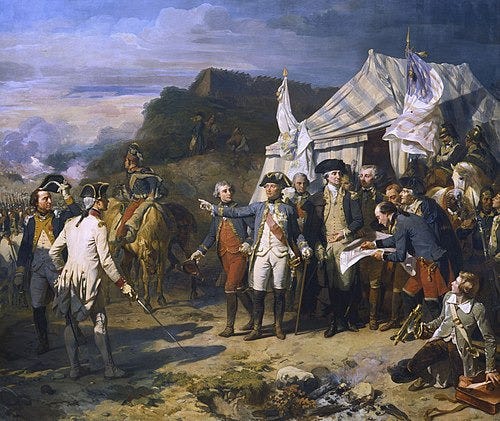
Eight: If it were not for aid from France, and to a somewhat lesser extent, Spain, The United States would not exist. No question about it.
Nine: The Cause was about commerce. Money. Business. All of the individual freedom stuff flows from the commercial aspect. This did not surprise me.
Ten: Nearly all of the FF’s were slave owners at one time or another. Even Dr. Benjamin Rush, who openly opposed the “peculiar institution,” wound up owning a single slave. See the original twin sins above.
Of course, I learned a lot more than just these 10 things. There are just the top takeaways of this journey. There was oh-so-much more; fun facts galore that I found at the library.
Did you know that while a diplomat in France during the American Revolution, Benjamin Franklin obtained the recipe for making tofu? He sent the recipe and some beans to a friend back in the not-yet united states. The beans grew great, Franklin’s friend reported, but the tofu didn’t work out. Franklin had confused garbanzo beans and soy beans. If not for a mix up about what kind of bean to use to make tofu, Franklin could have significantly changed American eating habits nearly 250 years ago.
Isn’t history cool?
TOMORROW, PART 2 — THE LIST OF ALL 50 BOOKS WITH MINI REVIEWS.
The List Of The 50 Books I Read After Watching "The American Revolution" Documentary

In November 2025, after viewing Ken Burns & Co.’s six-episode, 12-hour documentary, The American Revolution, I realized I didn’t know as much as I would like about the violent conflict and the events that gave birth to the United States.